Blurring Life and Work
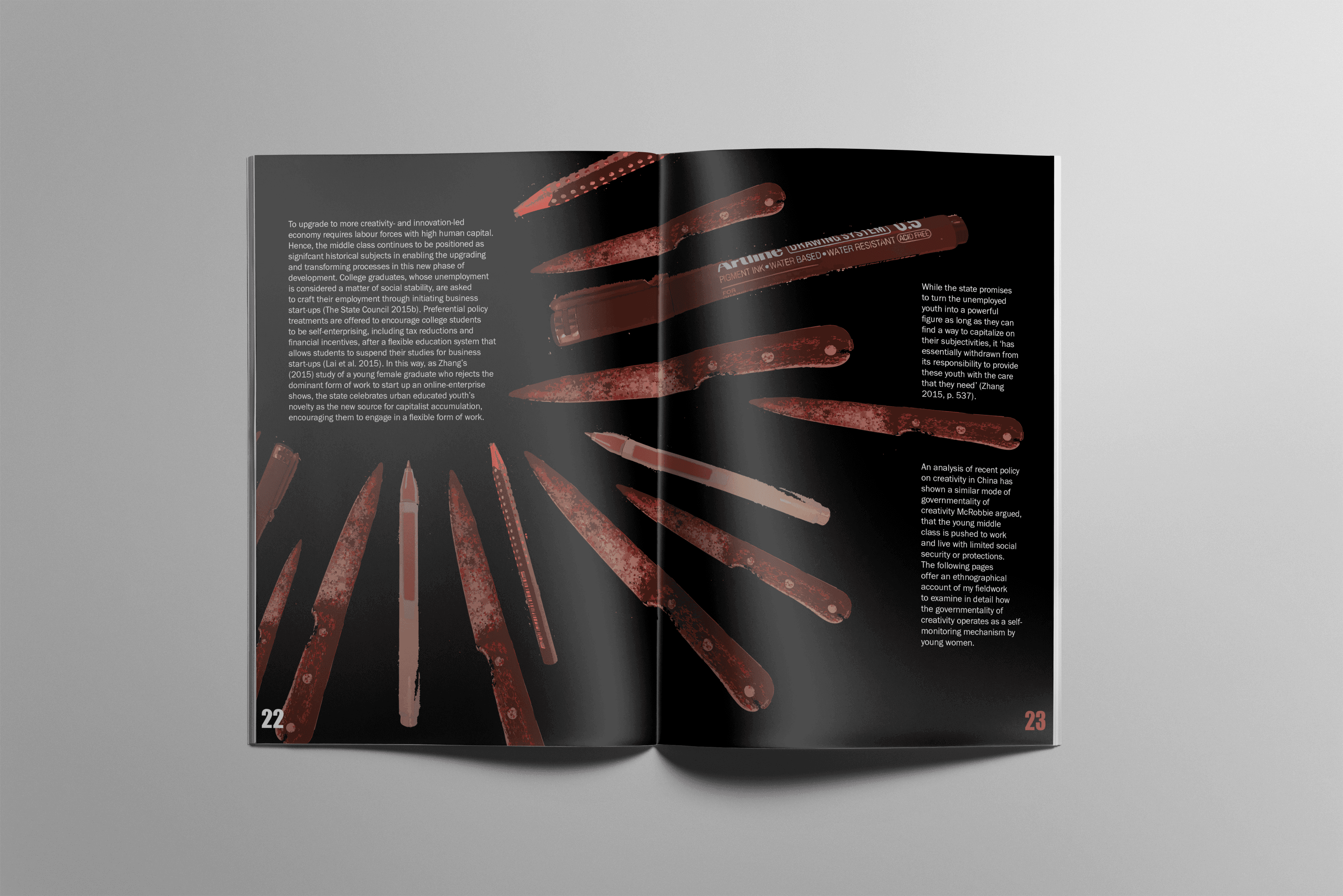
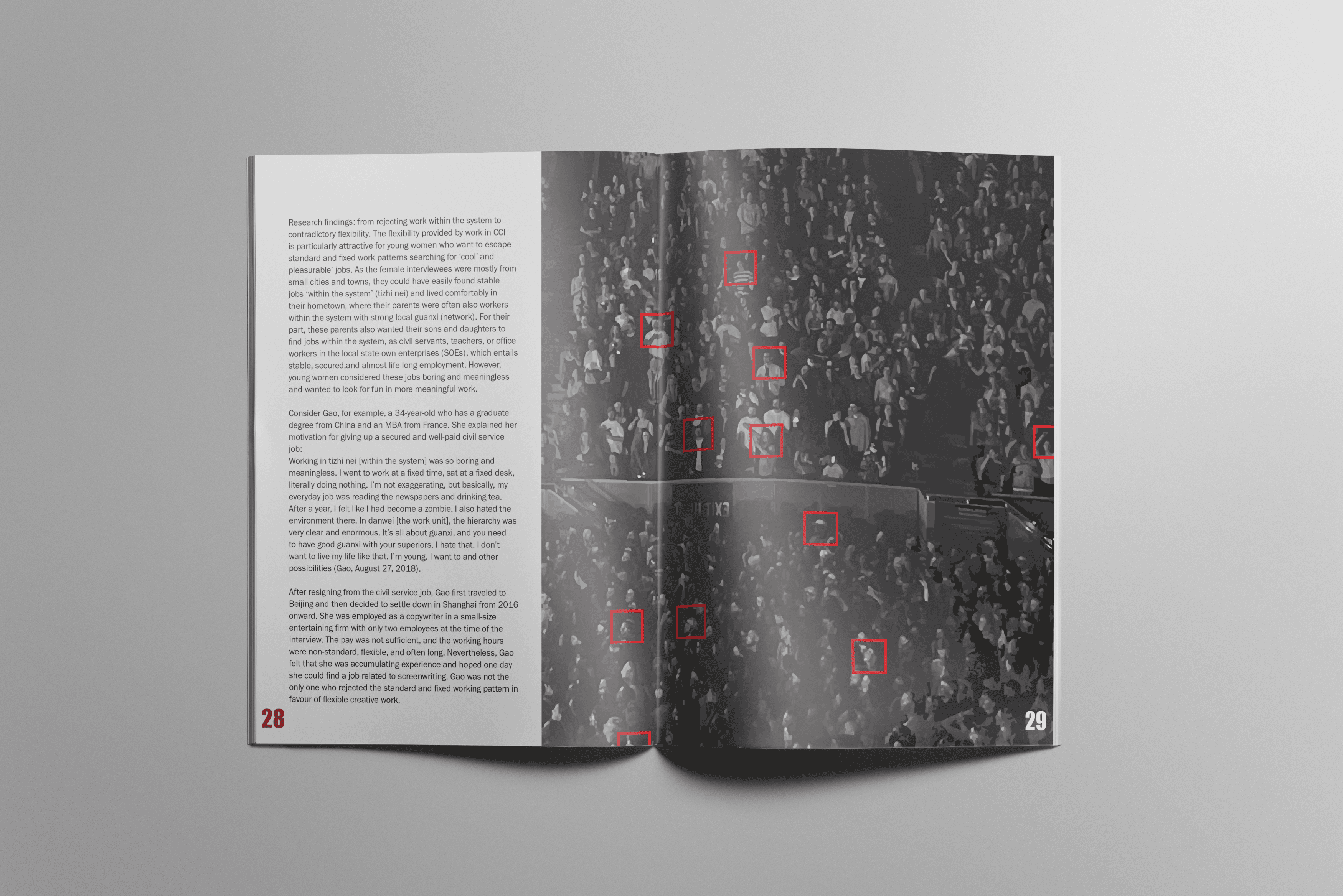
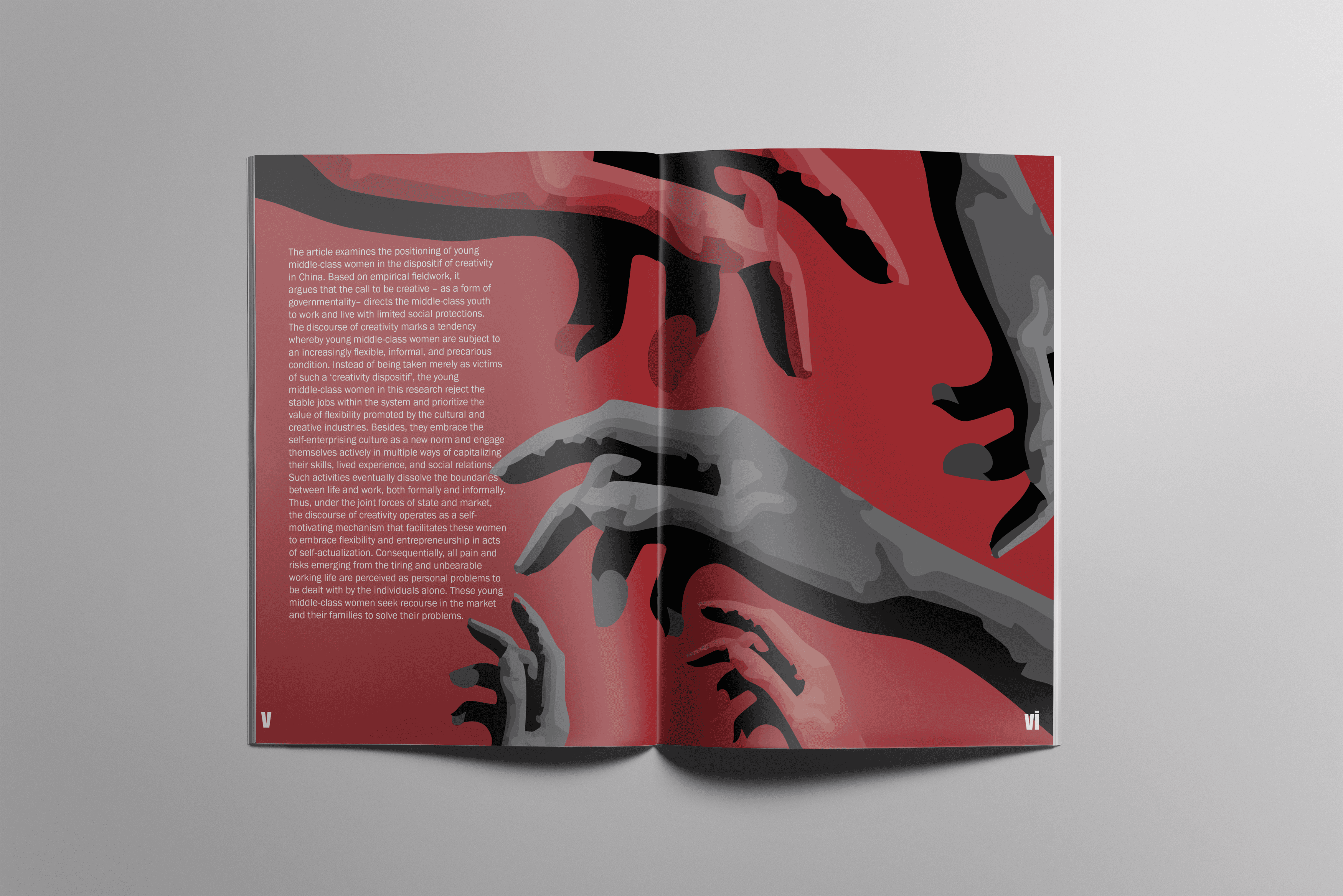
Lili Lin's text was developed into a 64-page monothematic publication exploring work–life boundary collapse and workplace pressure. The seemingly unfinished and distorted image making technique portrays discomfort and a sense of being monitored to the reader. This deliberate style shows how work and life can suffer under immense pressure.
CLIENT
Lili Lin
Role
Designer
Service
Publication Design

Background
Design Solution
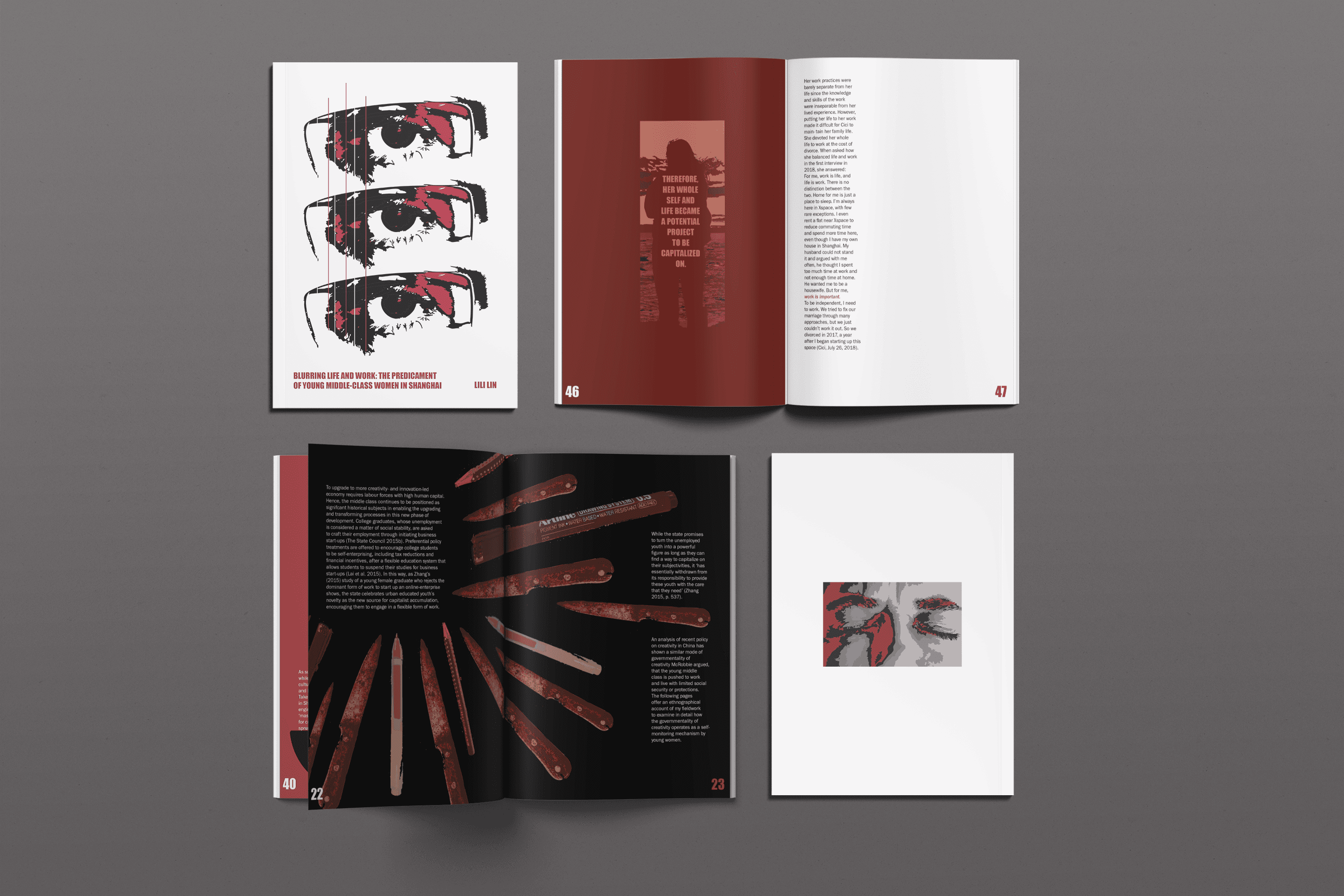
The key objective of this design was to develop a cohesive visual identity for Lili Lin’s text that conveys the emotional impact of collapsing work–life boundaries through imagery, colour, and visual hierarchy.
The publication is designed as a disciplined editorial piece that mirrors the tensions in Lin’s article. I use a stable academic framework, wide margins, and a strict hierarchy to create clarity and breathing room around dense sociological content. This structure gives the book a controlled, institutional tone, which I deliberately contrast with moments of disruption to reflect the lived instability described in the research.
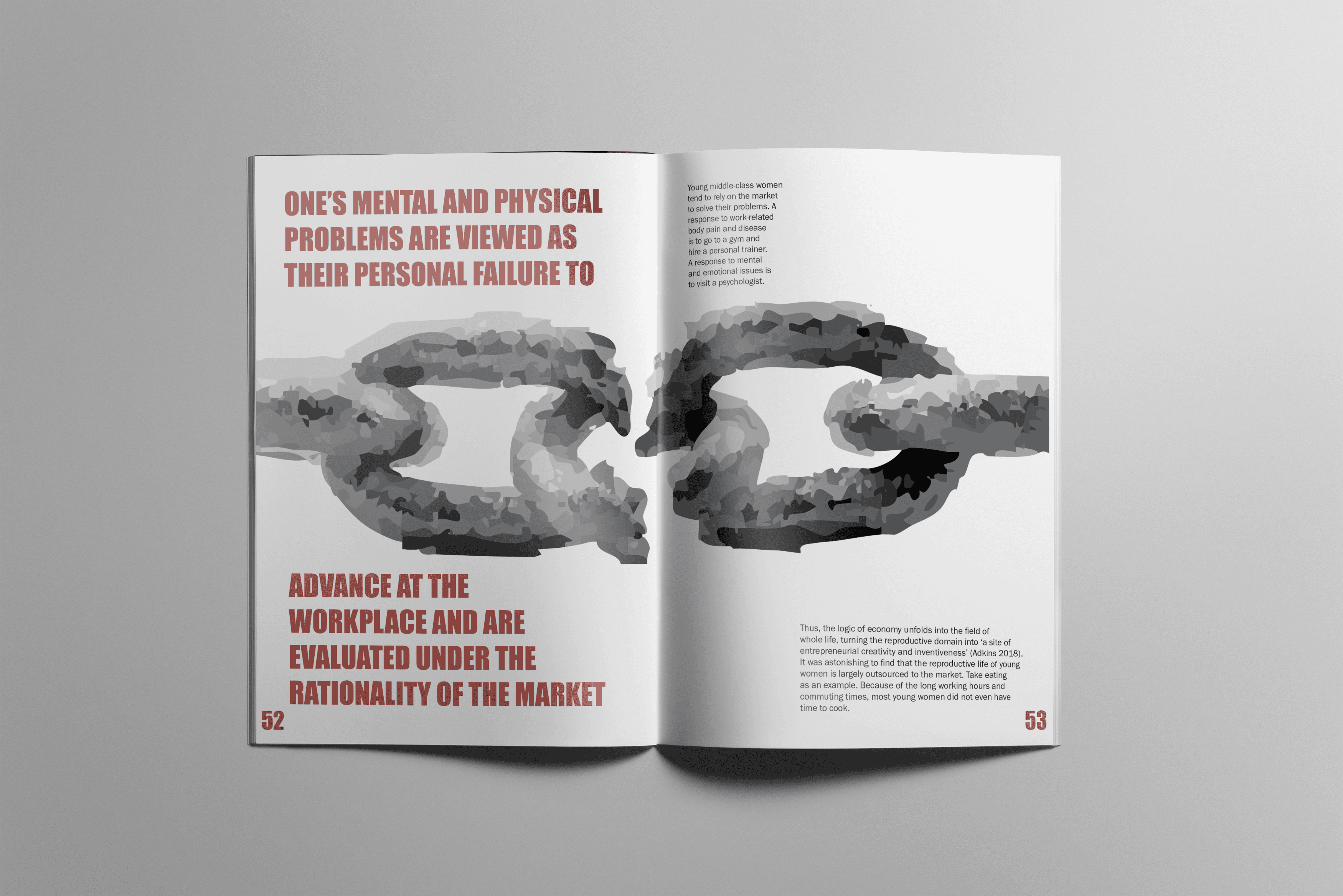
Throughout the book, abstract symbols and fragmented visual elements interrupt the clean layout at key thematic points. These aren’t illustrations; they act as conceptual markers that echo ideas of pressure and blurred boundaries between life and work. The result is a publication that holds two modes at once: ordered and unsettled. It functions as both a scholarly document and a designed artefact, using rhythm, space, and disruption to extend the meaning of the text.


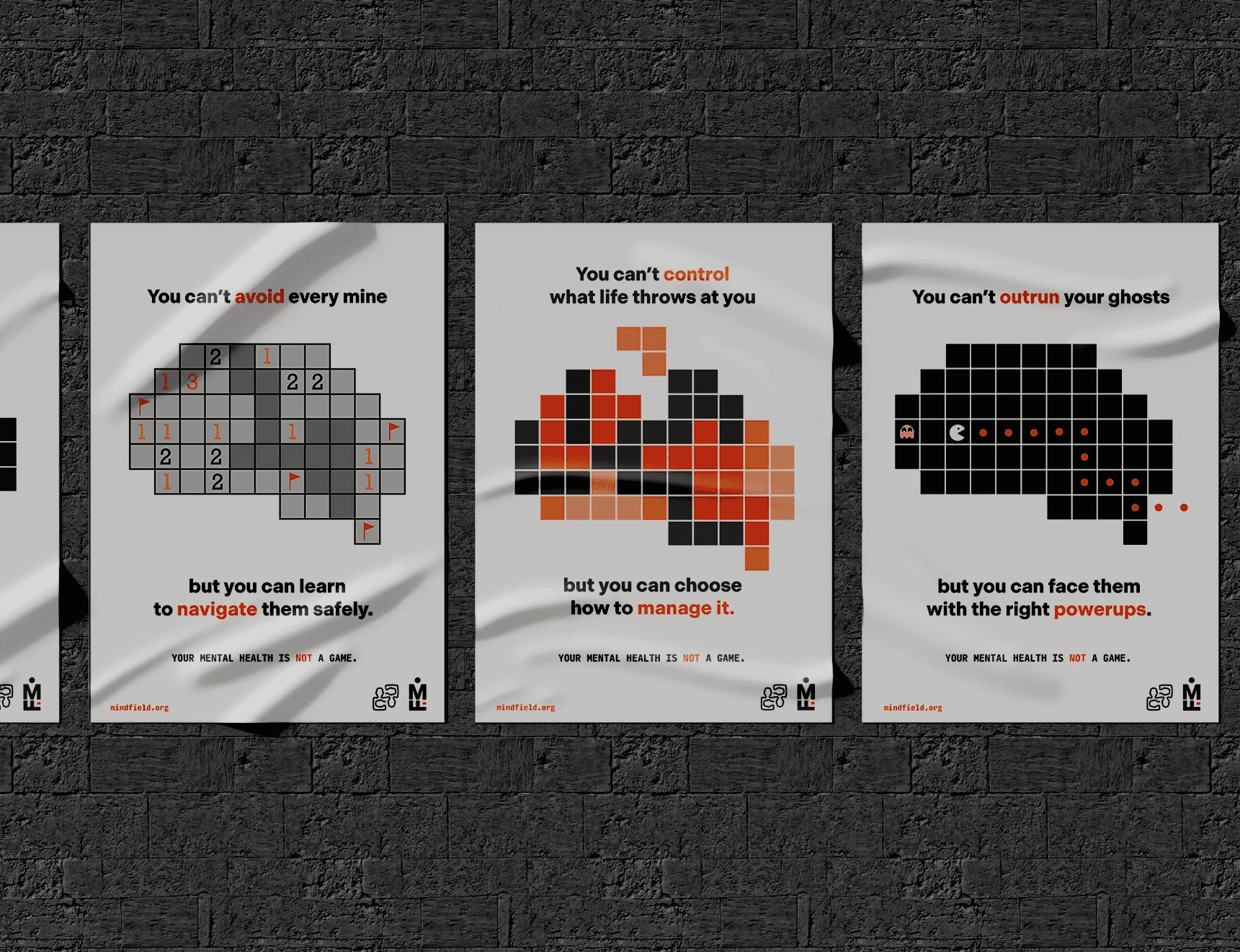
A mental‑health campaign that uses game‑inspired visual language to reflect the pressure young adults face, making mental wellbeing feel approachable, relatable and easier to talk about.
A mental‑health campaign that uses game‑inspired visual language to reflect the pressure young adults face, making mental wellbeing feel approachable, relatable and easier to talk about.
CLIENT
Lili Lin
Role
Designer
Service
Publication Design
MindField
A mental‑health campaign that uses game‑inspired visual language to reflect the pressure young adults face, making mental wellbeing feel approachable, relatable and easier to talk about.
The key objective of this design was to develop a cohesive visual identity for Lili Lin’s text that conveys the emotional impact of collapsing work–life boundaries through imagery, colour, and visual hierarchy.
Blurring Life and Work
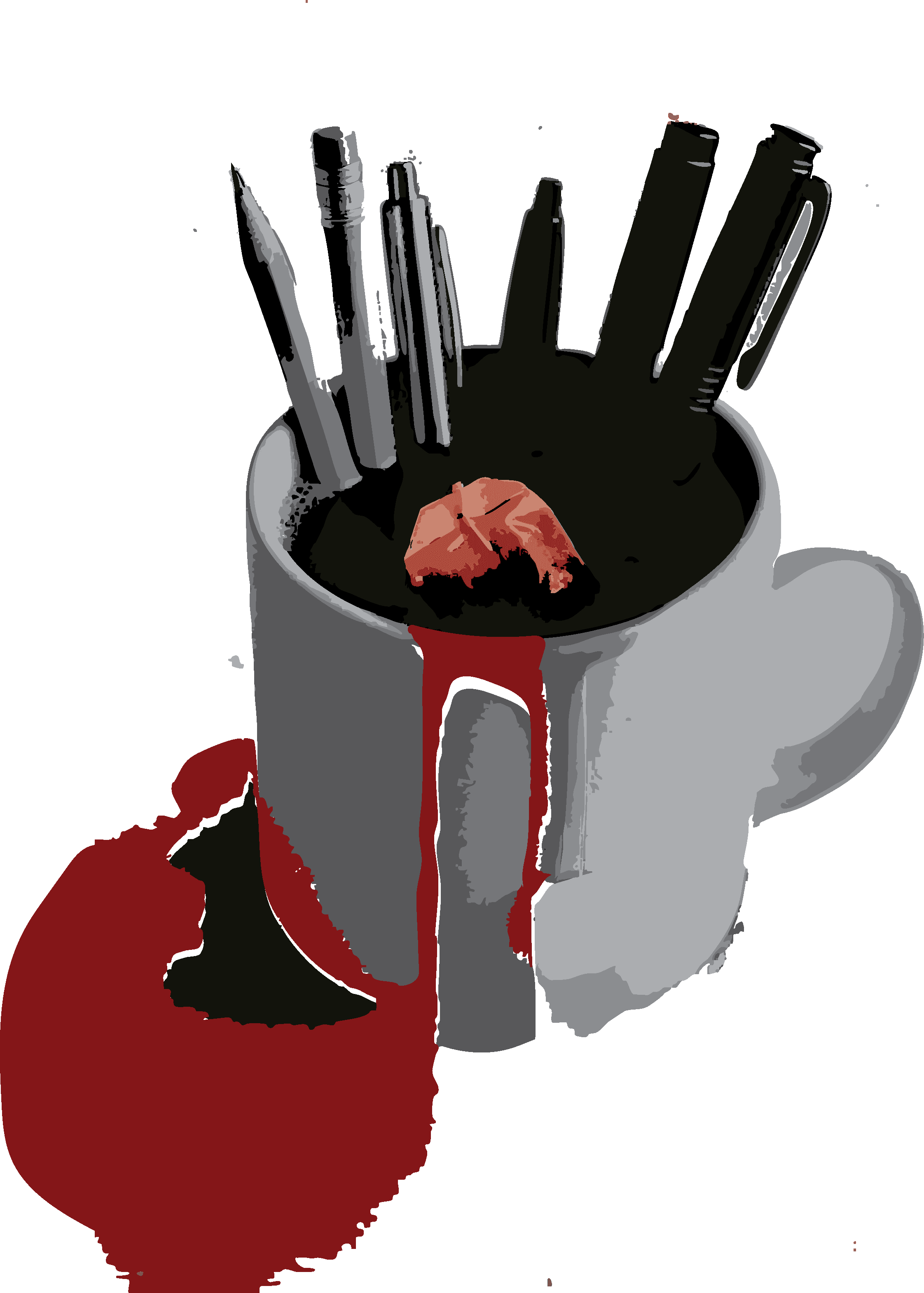
Lili Lin's text was developed into a 64-page monothematic publication exploring work–life boundary collapse and workplace pressure. The seemingly unfinished and distorted image making technique portrays discomfort and a sense of being monitored to the reader. This deliberate style shows how work and life can suffer under immense pressure.
The publication is designed as a disciplined editorial piece that mirrors the tensions in Lin’s article. I use a stable academic framework, wide margins, and a strict hierarchy to create clarity and breathing room around dense sociological content. This structure gives the book a controlled, institutional tone, which I deliberately contrast with moments of disruption to reflect the lived instability described in the research.
Throughout the book, abstract symbols and fragmented visual elements interrupt the clean layout at key thematic points. These aren’t illustrations; they act as conceptual markers that echo ideas of pressure and blurred boundaries between life and work. The result is a publication that holds two modes at once: ordered and unsettled. It functions as both a scholarly document and a designed artefact, using rhythm, space, and disruption to extend the meaning of the text.